

Yes, agroforestry can indeed play a significant role in fighting global warming. Agroforestry is a sustainable land management system that integrates trees and shrubs into agricultural landscapes.
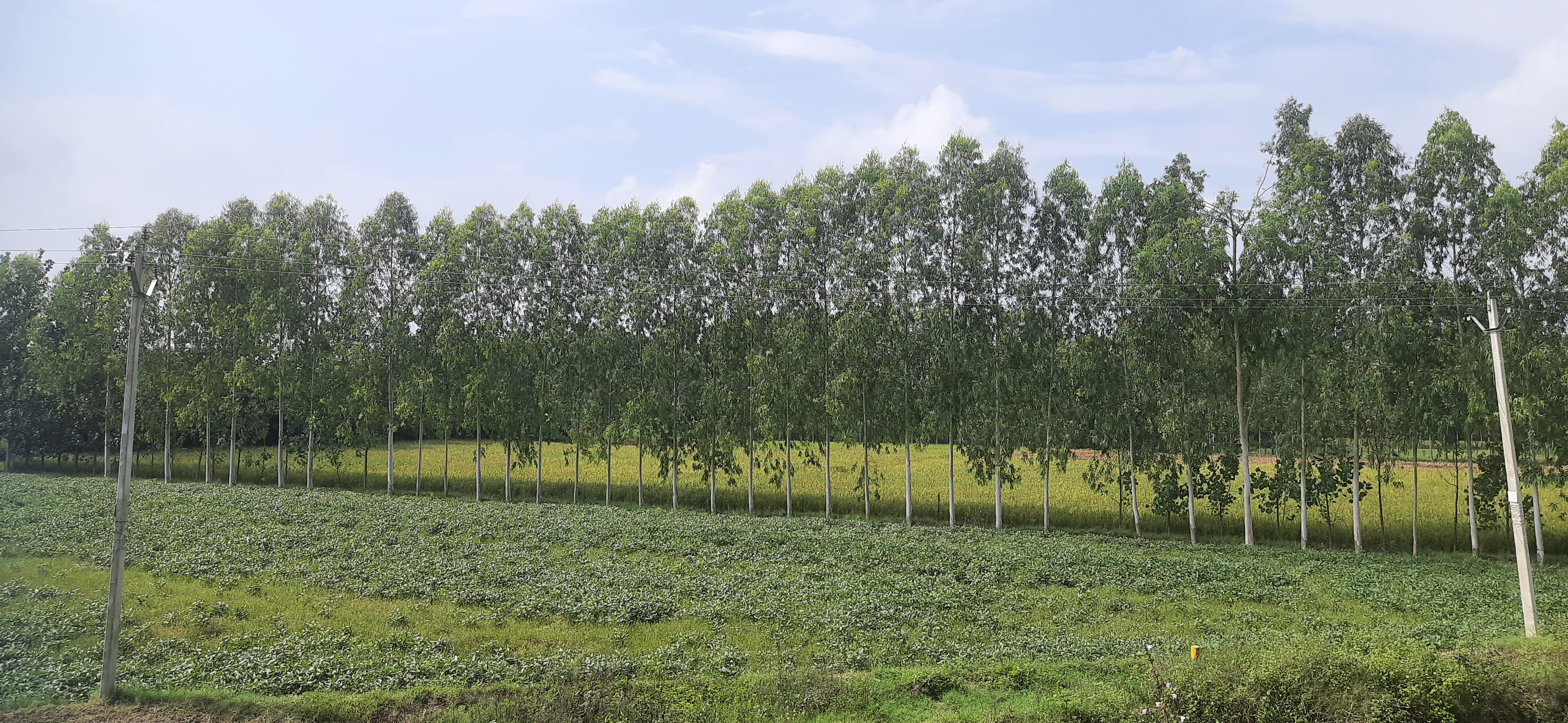
In Northern India, Farmers are happily adopting tree farming not only to fight global warming but also to get good income by selling trees to wood industries. One may wonder that despite of billions of dollars flowing into NGO’s and other campaigns, have not resulted in tree plantation significantly but the Agroforestry model based on Poplar /eucalyptus resulted in huge success among farmers.
Look at the tree plantations in the agriculture land in Northern India.
Agroforestry practice offers several benefits for both the environment and agricultural productivity, which contribute to mitigating climate change:
Carbon Sequestration and Agroforestry
Trees planted in agroforestry systems can sequester carbon dioxide from the atmosphere through photosynthesis, helping to offset greenhouse gas emissions. The woody biomass of trees stores carbon for long periods, reducing the carbon footprint of agriculture. The wood used as a products like table , bed, chair, walls, kitchen cutlery etc stores carbon at your home. Its a natural and cheapest way to fight climate change unlike other costly methods.

Soil Health and Agroforestry:
Agroforestry systems can improve soil health and fertility, which enhances carbon sequestration in the soil. Tree roots help to stabilize soil structure, prevent erosion, and increase soil organic matter, all of which contribute to carbon storage in the soil.
Biodiversity Conservation and Agroforestry:
Agroforestry promotes biodiversity by providing habitat for various plant and animal species. Diverse ecosystems are more resilient to climate change and can help maintain ecosystem services critical for agricultural productivity.
Microclimate Regulation and Agroforestry:
Trees in agroforestry systems can modify local microclimates by providing shade, reducing wind speed, and moderating temperature extremes. These microclimatic benefits can improve crop yields and reduce the energy inputs required for agricultural production.
Water Management:
Agroforestry systems help regulate water cycles by reducing soil erosion, enhancing water infiltration, and minimizing runoff. Improved water management can contribute to climate resilience and mitigate the impacts of droughts and floods.
Overall, agroforestry represents a holistic approach to sustainable land use that can contribute to climate change mitigation efforts while also providing multiple benefits for farmers, ecosystems, and communities.
Rohit Kansay

An engineer with a strong interest in agroforestry and farm economics, he shares practical, data-driven insights on poplar and eucalyptus farming, timber pricing in India, and wood market trends, drawing from industry observations and field-level experience.
Leave a Reply